Getting into Des Moines University College of Osteopathic Medicine (DMU-COM)
DMU is the second-oldest osteopathic medical college in the country — now on a brand-new campus and running one of the nation's most productive primary-care pipelines. Here's an honest, physician-reviewed look at what it takes and what it seems to value. No admission odds — just verified facts and how to read them.
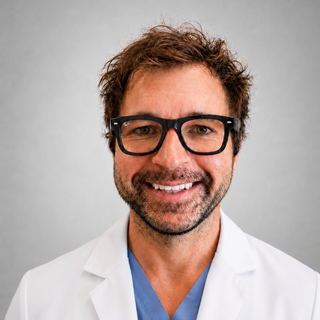
Updated September 2026 · 2026–2027 cycle · figures cited to DMU's official admissions pages
What is DMU's mission — and what does it signal?
To improve lives in our global community by educating diverse groups of highly competent and compassionate health professionals.DMU official mission3
Two words in that sentence do the real work: "diverse" and "global." DMU is a standalone health-sciences university — not a med school bolted onto a hospital system — and its mission points outward, toward impact and access. That shows up concretely: every DO student completes a required fourth-year rotation in a community, rural, or international underserved setting, and the class is drawn from 31 states, with only about 16% from Iowa.1 If your story is about service and reaching people who lack care, that reads here as genuine alignment, not a talking point.
What makes DMU's curriculum distinctive?
DMU-COM is a four-year, systems-based program of 175 credit hours. Years 1–2 are the integrated pre-clinical phase — foundational sciences taught by organ system, with simulated patient encounters, small-group work, and OMM woven throughout — and core rotations start in August of Year 3. The new West Des Moines campus added a dedicated Simulation Center and named skills and trauma labs, so hands-on training starts early.4 Two features are worth naming specifically in an application:
- The Year-4 underserved rotation requirement: a four-week rotation in a community, rural, or international setting — required of everyone, not optional.
- Dual degrees (applied for after DO acceptance): DO/MPH, DO/MHA, DO/MSA (Anatomy), DO/MSBS (Biomedical Sciences), and DO/PhD.5
If one of these maps to your background — a public-health-minded applicant eyeing the MPH, or someone drawn to DMU's underserved-care model — say so specifically. A concrete "why DMU" beats generic enthusiasm every time.
How does DMU review applicants?
DMU doesn't set a hard cutoff to apply. It lists a recommended minimum of 2.8 cumulative and 2.8 science GPA and states plainly that all applications are considered; there's no published MCAT minimum.6 The snapshot numbers are entering-class averages, not cutoffs. What DMU expects: the standard prerequisites (biology, general and organic chemistry, biochemistry, physics, and English/composition), an MCAT within three years of matriculation, and a minimum of three references. One detail that trips people up in a good way — DMU doesn't specifically require a physician's letter, and a pre-health committee letter counts as two of your three references.
Does DMU-COM use the MMI — and what is the interview like?
Good news if the MMI intimidates you: DMU doesn't use it. Its interview is virtual and built around three parts — a program/dean's overview, a live Q&A with current students, and a live interview with a DMU faculty member.7 This is a conversation-style faculty interview, not a rapid-fire station circuit. Because it's a single faculty conversation, know your own application cold and be ready to talk clearly about why osteopathic medicine, why DMU specifically (the underserved rotation and primary-care identity are real hooks), and a service experience that shows rather than tells. Since it's virtual, do a real tech run first.
When should I apply, and is there a secondary?
Here's a nice surprise: DMU's admissions pages don't describe a separate secondary application, so you're not staring down a stack of supplemental essays here. What genuinely matters is timing — DMU uses rolling admissions and says directly that early applicants are more likely to be interviewed than later ones.7 Applications go through AACOMAS, which opens in early May for the class enrolling the following August. The single highest-leverage move at DMU is simply to be complete early.
How much does DMU-COM cost?
For 2026–2027, DO tuition is $68,620 for the year. That's before separate fees — DMU's cost-of-attendance materials list items like student health insurance (about $1,996 per semester) plus small screening fees — and before living expenses.8 Tuition rises yearly, so confirm the current figure on DMU's official page before you apply.
Where do DMU graduates match?
DMU's outcomes are a real strength. It reports a 99.5% placement rate for 2026 (197 of 198), with 100% in several recent years, and describes itself as the nation's top producer of primary care physicians.11 For its Class of 2026 — a 99% match — the largest categories were family medicine (44), internal medicine (36), and emergency medicine (32), followed by pediatrics and psychiatry, across 33 states. (DMU doesn't publish a single primary-care percentage, so we're giving you the actual counts rather than a rounded stat.) If primary care or a service-oriented path is your goal, the outcomes and the mission point the same way.
Service and primary care aren't slogans here — they're built into the degree.
A required underserved rotation, a class pulled from 31 states, and one of the country's strongest primary-care match records all point the same direction. DMU leaves real room for an applicant whose GPA sits near or below the averages but whose story — service, “why DO,” a genuine pull toward primary or community care — carries weight the numbers don't. With a recommended (not required) GPA floor and no separate secondary to slow you down, the winning move is a specific, mission-aligned application submitted early. This is our read of DMU's own materials, not a prediction of admission.
See exactly where you stand — at DMU and every school on your list
Preceptorly is admissions software built by a practicing physician. It matches your real numbers to each school's published averages — never fake odds — and coaches the parts that actually decide your cycle:
Keep going
Frequently asked
Does DMU-COM use the MMI?
No. DMU conducts a virtual interview that includes a program overview, a live Q&A with current students, and a live interview with a DMU faculty member — it is not a multiple mini-interview.
Is there a minimum GPA or MCAT?
DMU lists a recommended minimum of 2.8 cumulative and 2.8 science GPA and states all applications are considered; there is no published MCAT minimum. The AACOM Choose DO averages (year not stated) are 3.71 cumulative GPA and 507.1 MCAT; a science GPA is not available. MCAT scores must be within three years of matriculation.
How much does DMU-COM cost?
For 2026–2027, DO tuition is $68,620 per year, before separate fees (such as student health insurance) and living expenses.
Does DMU require a physician letter of recommendation?
No. DMU requires a minimum of three references and does not specifically require a physician letter; a pre-health committee letter counts as two references.
Is there a separate secondary application?
DMU's admissions pages do not describe a separate secondary application. Admissions are rolling, so applying early through AACOMAS is the highest-leverage move.
What residency outcomes does DMU report?
DMU reports a 99.5% placement rate for 2026 and describes itself as the nation's top producer of primary care physicians; family medicine, internal medicine, and emergency medicine were the largest match categories for its Class of 2026.
Sources — DMU official pages
- AACOM Choose DO — DMU-COM detail page (GPA and MCAT averages, year not stated; class size, entered 2025): aacom.org — DMU-COM; states represented: dmu.edu/do/class-profile
- DMU — History (founded 1898; second-oldest DO college; West Des Moines campus, 2023): dmu.edu/about/history
- DMU — Mission, Vision & Values: dmu.edu — mission
- DMU — DO Curriculum (structure; Year-4 underserved rotation; simulation): dmu.edu/do/curriculum
- DMU — DO Dual-Degree options: dmu.edu/do/dual-degree
- DMU — DO Admission Requirements (prerequisites, references, MCAT recency, recommended GPA): dmu.edu/do/admission-requirements
- DMU — DO Admissions Process (virtual interview; rolling admissions): dmu.edu/do/admissions-process
- DMU — Tuition & Fees (2026–2027): dmu.edu — tuition & fees
- DMU — DO FAQ (interview details; recommendations): dmu.edu/do/faq
- DMU — DO Program Outcomes (placement rates; COMLEX): dmu.edu/do/program-outcomes
- DMU — Class of 2026 Match results (99% match; specialty counts; top producer of primary care): dmu.edu — Class of 2026 match
Figures reflect DMU's officially published data as of September 2026 and can change each cycle — always confirm the current numbers on DMU's official pages before you apply. Preceptorly is not affiliated with Des Moines University. This page is an independent, physician-reviewed resource and does not predict admission.