Getting into A.T. Still University – Kirksville College of Osteopathic Medicine (ATSU-KCOM)
This is where osteopathic medicine began. Founded in 1892 by A.T. Still himself, KCOM is the first DO school in the world — and it still trains physicians around a national network of rural and underserved sites. Here's an honest, physician-reviewed look at what it takes and what it values. No admission odds — just verified facts and how to read them.
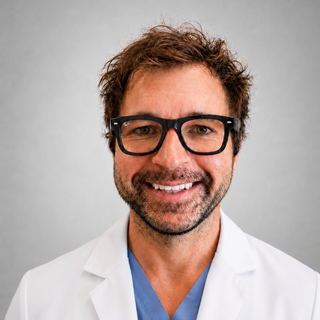
Updated September 2026 · 2026–2027 cycle · figures cited to KCOM's official admissions pages
Why does KCOM matter — and what does its mission signal?
When A.T. Still University's Kirksville College of Osteopathic Medicine was founded in 1892 by Andrew Taylor Still, DO, it became the first institution of osteopathic education in the world.ATSU official history2
KCOM isn't just an old school — it's the school. Andrew Taylor Still, the founder of osteopathic medicine, started it, and everything the profession became grew from here. That matters for your application in a very specific way: at KCOM, "why osteopathic medicine?" isn't a checkbox — it's the school's whole identity. A candidate who can speak genuinely and specifically about the osteopathic philosophy, and why it drew them, is answering the question this school cares about most. Paired with that legacy, the university's mission — "a learning-centered university dedicated to preparing highly competent professionals through innovative academic programs"3 — shows up in a clinical model that sends students to a national network of sites across eleven states, with a stated commitment to rural and underserved care.
What makes KCOM's curriculum distinctive?
KCOM is a four-year, systems-based program of 208 credit hours. Years 1–2 are didactic and on-campus in Kirksville — "Foundations of Medicine" and integrated basic and clinical sciences — before students move into 88 weeks of clinical rotations across KCOM's regional/national site network in Years 3–4, including a required rural/underserved family-medicine experience.4 A few things are worth naming in an application:
- "The Complete DOctor": a hallmark longitudinal course that starts clinical skills early — physical exam, communication, ethics, jurisprudence, and the social determinants of health.
- Dual degree: DO/Master of Public Health.
- Early-acceptance tracks: Still Scholars (for sophomores, 3.4+ GPA) and Early Decision (3.50+ GPA, 502+ MCAT).
How does KCOM review applicants?
Unlike some schools, KCOM publishes explicit minimums: a 2.8 cumulative and 2.8 science GPA to apply, and an MCAT taken within three years of application.5 The snapshot figures are averages well above those floors — but the floors are real, and meeting them puts you in the pool. Prerequisites are a full year each of biology, physics, general chemistry, and organic chemistry (with labs), plus English, all with a grade of C or higher. Letters are specific: two — one from a pre-health committee, advisor, or science-faculty member, and one from a licensed physician (DO or MD) who isn't related to you. KCOM also strongly recommends about 100 hours of clinical/shadowing experience and roughly 100 hours of service to the underserved — not hard requirements, but a clear signal of what they want to see.
Does ATSU-KCOM use the MMI — and what is the interview like?
KCOM does not use the MMI. Its interview day is built around three half-hour one-on-one interviews — with a basic-science faculty member, a clinician, and a member of the admissions team — plus lunch, an OMM demonstration, and a student-led tour.6 Three conversations means three chances to connect, and three interviewers comparing notes, so rehearse being clear and consistent across all three: why osteopathic medicine (this is the founding school — be genuine and specific), a real experience with underserved or rural care, and how you reason through an ethical situation out loud. Practicing out loud, ideally on camera, beats memorizing.
How much does ATSU-KCOM cost?
For 2026–2027, KCOM tuition is $68,960 for the year, plus a student technology fee of about $1,484 per year and a one-time $1,200 medical-equipment fee in the first year — before living expenses.7 Tuition changes yearly, so confirm the current figure on ATSU's official page before you apply.
Where do KCOM graduates match?
KCOM's outcomes back up its mission. It reports that 100% of 2025 graduates matched into a residency (97.4% ACGME, 2.6% military), with a 99.5% four-year rolling placement rate and 56.2% placing into primary care in 2025.1 The largest specialties that year were family medicine (29.4%), emergency medicine (17.0%), internal medicine (15.0%), and pediatrics (9.8%). If primary care or a service-oriented path is your goal, KCOM's numbers and its founding identity point the same way.
This is the school where “why DO” has to be real.
Everything about KCOM — its 1892 origin, its rural/underserved rotation network, its 56% primary-care match — rewards an applicant who genuinely believes in osteopathic medicine and service, not one performing it. The published 2.8/2.8 minimums leave room below the averages for a candidate whose story carries weight, but the story has to be specific: real osteopathic exposure, real service, a concrete reason KCOM in particular. Meet the floors, hit the recommended experience, and write toward the mission. This is our read of KCOM's own materials, not a prediction of admission.
See exactly where you stand — at KCOM and every school on your list
Preceptorly is admissions software built by a practicing physician. It matches your real numbers to each school's published averages — never fake odds — and coaches the parts that actually decide your cycle:
Keep going
Frequently asked
Does ATSU-KCOM use the MMI?
No. KCOM uses three half-hour one-on-one interviews on interview day — with a basic-science faculty member, a clinician, and a member of the admissions team — plus an OMM demonstration and campus tour. It is not a multiple mini-interview.
Is there a minimum GPA or MCAT?
Yes. KCOM requires a minimum 2.8 cumulative and 2.8 science GPA to apply, and an MCAT within three years of application. The school's published averages are 3.69 cumulative GPA, 3.62 average science GPA, and 503 MCAT (year not stated).
How much does ATSU-KCOM cost?
For 2026–2027, KCOM tuition is $68,960 per year, plus a student technology fee of about $1,484 per year and a one-time $1,200 medical equipment fee in the first year, before living expenses.
Why is KCOM significant in osteopathic medicine?
KCOM was founded in 1892 by Andrew Taylor Still, DO — the founder of osteopathic medicine — making it the first institution of osteopathic education in the world.
Does ATSU-KCOM require a physician letter of recommendation?
Yes. KCOM requires two letters: one from a pre-health committee, health-professions advisor, or science-faculty member, and one from a licensed physician (DO or MD) who is not related to the applicant.
Sources — KCOM official pages
- ATSU-KCOM — Fast Facts (published GPA/MCAT/class-size averages; 2025 match, placement, primary-care %): atsu.edu — KCOM Fast Facts
- ATSU-KCOM — First Institution of Osteopathy (founded 1892 by A.T. Still): atsu.edu — first institution of osteopathy
- ATSU — Mission (university-level): atsu.edu — about KCOM
- ATSU-KCOM — DO Program (curriculum; national rotation network; The Complete DOctor; DO/MPH; early tracks): atsu.edu — DO program
- ATSU-KCOM — Preparing for DO Admission (prerequisites, 2.8/2.8 minimums, MCAT recency, letters, recommended hours): atsu.edu — preparing for admission
- ATSU-KCOM — Application Process (three one-on-one interviews; secondary; AACOMAS timeline): atsu.edu — application process
- ATSU — Tuition and Fees (2026–2027): atsu.edu/tuition
Figures reflect ATSU-KCOM's officially published data as of September 2026 and can change each cycle — always confirm the current numbers on ATSU's official pages before you apply. Preceptorly is not affiliated with A.T. Still University. This page is an independent, physician-reviewed resource and does not predict admission.